
Buyers should check tempered glass thickness, dimensions, edge quality, tempering certification, impact-safety documentation, and compatibility with the padel court's steel frame before placing an order. A glass panel that has the correct nominal thickness may still be unsuitable if its dimensions, hole positions, edge treatment, or supporting system do not match the approved design. When purchasing a Rayjun panoramic padel court, request a complete glass specification and supporting documents rather than relying on a product description alone.
What Glass Specifications Matter for a Padel Court?
The specification should identify the glass type, nominal thickness, panel dimensions, permitted tolerances, edge treatment, holes or cutouts, and the applicable safety requirements.
Tempered glass is heat-treated to improve its mechanical and thermal performance compared with ordinary annealed glass. However, tempering does not make glass unbreakable, and the finished panel must be compatible with the forces, support conditions, and impact risks of the court design.
A complete purchasing specification should cover:
-
Glass type and nominal thickness.
-
Panel width, height, and dimensional tolerances.
-
Edge finishing and corner treatment.
-
Hole locations and cutouts, if required.
-
Tempering process and identification.
-
Applicable product standard and test documentation.
-
Installation orientation and support details.
-
Replacement compatibility and traceability.
The exact requirements should be established by the court design, local regulations, and any applicable sports-facility standards.
Is 12 mm Tempered Glass Suitable for Every Padel Court?
No. A 12 mm panel is used in some commercial padel court systems, but thickness alone cannot establish whether a panel is suitable for every installation.
Rayjun lists 12 mm tempered glass in its product information for the US-market padel court configuration. Buyers should treat this as a specification for that listed configuration, not a universal requirement for all courts or markets.
The suitability of a panel depends on its dimensions, support arrangement, impact conditions, fixing details, glass quality, and the structural requirements of the complete enclosure. A larger panel or a different support design may require a different engineering assessment.
Ask the supplier to confirm the exact glass specification in the quotation and provide the applicable test reports or conformity documentation.
Which Standards and Documents Should Buyers Request?
The relevant standards depend on the destination country and the product's intended use.
For example, EN 12150-1 addresses the definition and description of thermally toughened soda-lime silicate safety glass. In the United States, buyers may encounter ANSI Z97.1 or CPSC 16 CFR Part 1201 in applicable architectural safety-glazing contexts. The relevant standard and its scope should be confirmed with the project engineer or local compliance specialist rather than assuming that one certification automatically satisfies every requirement.
Request the following documentation where applicable:
| Document or check | What it helps establish |
| Glass product specification | Type, thickness, dimensions, and configuration |
| Tempering or safety-glazing test report | Evidence of compliance with the identified standard |
| Manufacturer's declaration or certificate | Product identity and stated conformity |
| Batch or panel identification | Traceability to the supplied product |
| Dimensional inspection record | Compliance with specified panel dimensions |
| Edge and hole inspection | Suitability for installation and reduced risk of damage |
| Packing and shipment inspection | Condition of the glass before dispatch |
The documentation should identify the actual product supplied. A generic certificate without a clear link to the glass type, manufacturer, or applicable standard is less useful for acceptance.
How Can Buyers Inspect Glass Quality Before Shipment?
Inspection should cover both the glass itself and the details needed for installation.
Check Dimensions and Thickness
Measure panel dimensions and, where appropriate, thickness using an agreed method. Compare the results with the approved drawings and tolerances.
A dimensional mismatch can prevent the panel from fitting correctly or place unexpected stress on the mounting system.
Inspect Edges, Corners, and Holes
Glass edges and corners can be vulnerable to damage. Check for chips, cracks, unacceptable edge defects, and damage around drilled holes or cutouts.
Do not install a visibly damaged panel simply because its thickness and dimensions are correct. Follow the supplier's handling and acceptance procedure.
Review Identification and Documentation
Match panel labels, packing lists, and inspection records to the purchase order. If the project requires traceability, confirm that the records identify the delivered batch or panel group.
A pre-shipment inspection can help identify problems before the glass reaches the installation site, where replacement may be more expensive.
Why Must Tempered Glass Match the Steel Frame?
A padel court enclosure is a combined structural system. Glass panels, steel posts, fasteners, supports, and connections must work together under the loads expected in service.
Incorrect hole positions, unsuitable support spacing, or excessive contact pressure can create stress concentrations and increase the risk of breakage. Installation methods should follow the approved design, including specified gaskets, clearances, fasteners, and tightening procedures.
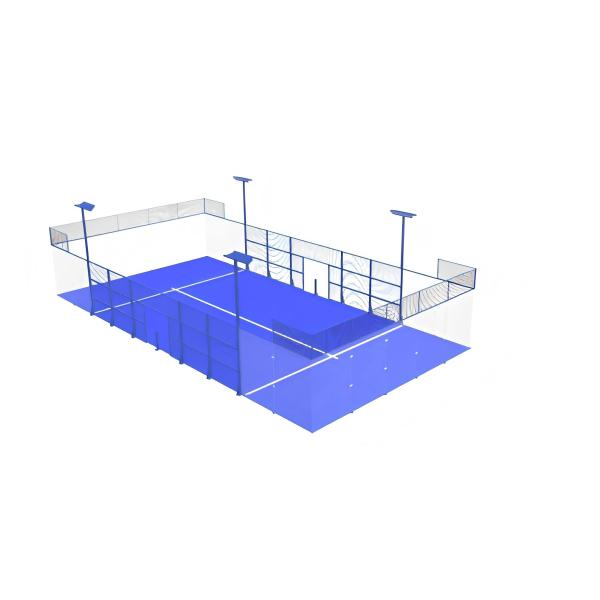
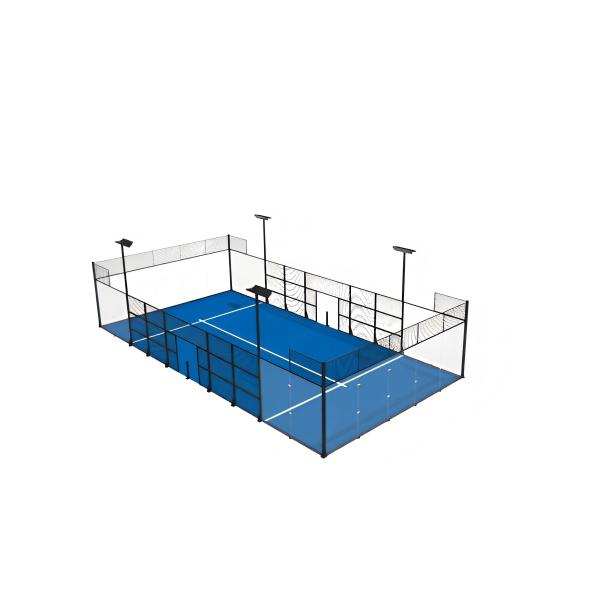
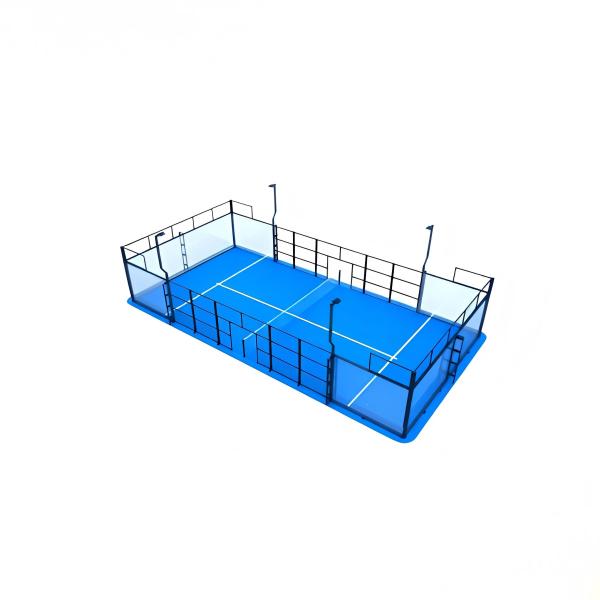
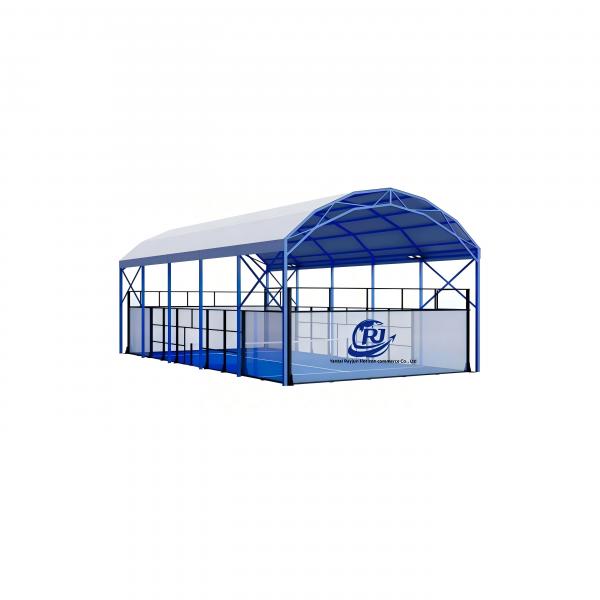
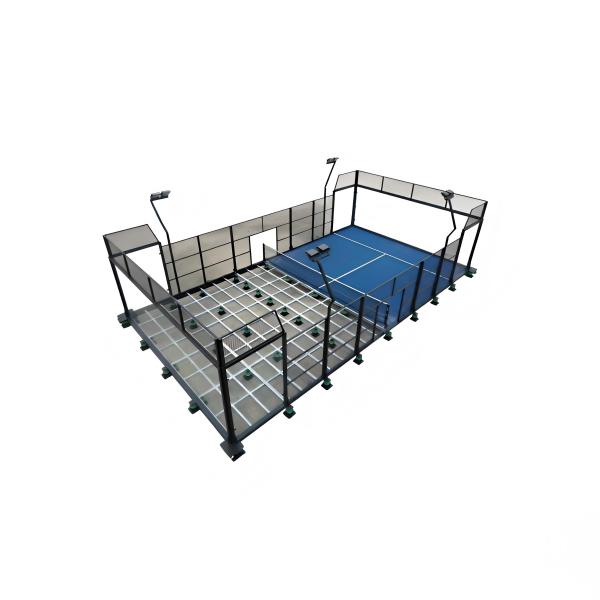
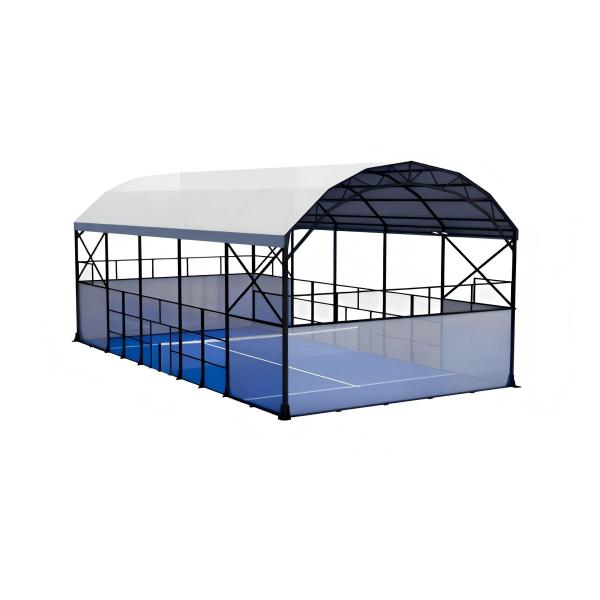
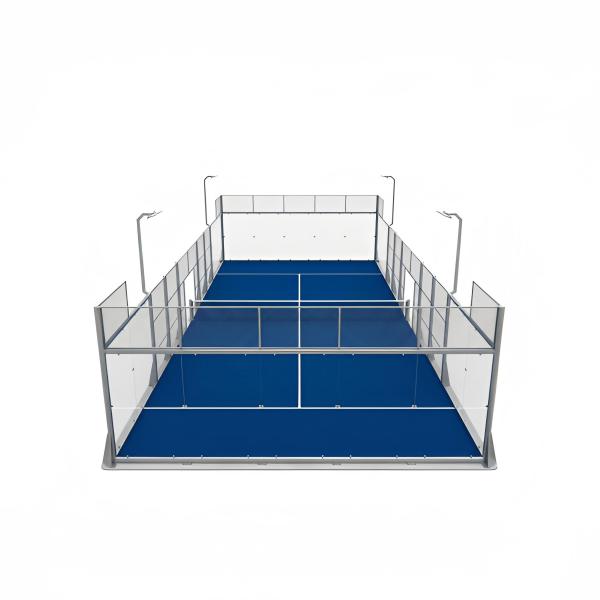
Rayjun's super panoramic padel court uses a panoramic configuration with a steel structure and glass enclosure. For any panoramic or reduced-post design, buyers should request confirmation that the proposed glass dimensions and support details have been assessed as a complete system.
How Should Buyers Compare Glass Suppliers?
Compare the documented specification, consistency, lead time, packaging, replacement availability, and warranty terms—not simply the price per panel.
| Comparison factor | Questions to ask |
| Glass specification | Is the thickness and glass type explicitly stated? |
| Compliance | Which standard applies, and what evidence is supplied? |
| Dimensions | Are panel sizes and tolerances confirmed on drawings? |
| Edge processing | Are edges and holes finished as specified? |
| Traceability | Can the delivered panels be linked to inspection records? |
| Packaging | Are panels protected against impact and movement during transport? |
| Replacement | Can matching panels be supplied if breakage occurs later? |
| Warranty | Which defects are covered, and what exclusions apply? |
A lower-cost quotation may exclude inspection records, replacement support, or special packaging. Buyers should compare the complete supply scope before making a decision.
What Are the Main Risks When Importing Tempered Glass?
Glass is vulnerable to edge damage and impact during handling and transportation. Incorrect packing, poor loading practices, or inadequate protection can lead to damage that is discovered only after the shipment arrives.
Before ordering, confirm the packing method, loading orientation, handling instructions, inspection process, and procedure for reporting transport damage. Clarify who bears the risk at each stage under the agreed delivery terms.
Buyers should also verify whether local building rules require specific safety-glazing markings, certificates, or installation methods. Compliance should be assessed for the destination market, not inferred from the product's country of origin.
Frequently Asked Questions
Is 12 mm tempered glass enough for a commercial padel court?
It may be suitable for a particular engineered court system, but thickness alone does not establish compliance or structural suitability. Confirm the panel dimensions, support design, applicable standards, and test documentation for the exact configuration.
Does tempered glass need a certification or test report?
The required documentation depends on the destination market, project specification, and applicable safety-glazing rules. Buyers should identify the relevant standard and request documents that clearly apply to the supplied glass.
Can a glass panel with the correct thickness still be rejected?
Yes. Incorrect dimensions, damaged edges, misplaced holes, or missing required documentation can make a panel unsuitable even when its nominal thickness is correct. Inspection should follow the approved drawing and acceptance criteria.
Should buyers inspect glass before shipment?
Pre-shipment inspection is useful because it can identify dimensional errors and visible defects before international transportation. It should be combined with appropriate packaging and a documented procedure for handling damage in transit.
What should be included in a glass specification sheet?
Include glass type, thickness, dimensions, tolerances, edge treatment, hole positions, applicable standards, required documentation, and installation details. These requirements should match the approved court drawings and the destination market.
Request a Padel Court Glass Specification Review
Rayjun supplies padel court systems with steel structures and glass enclosures for international projects. Contact Rayjun at andrew@rayjunhorizon.com with your destination market, court model, glass thickness requirement, approved drawings, and compliance requirements to confirm the proposed glass specification and documentation.